How to Buy Wholesale Furniture: A Practical Guide for Retailers and Every Type of Business
Buying furniture wholesale means purchasing at trade pricing from a supplier who sells only to businesses, then reselling it, installing it for clients, or placing it in a space you operate. The mechanics are not complicated. But furniture punishes guesswork more than most categories, because units are bulky, freight is expensive, lead times run long, and your money can sit still for months. This guide walks the decisions in the order you will actually meet them.
What does buying furniture wholesale actually involve?
Buying furniture wholesale means opening a trade account with a supplier, and then purchasing at prices set below retail on the condition that you resell the goods or use them commercially. On HomeRoots, wholesale pricing unlocks after account approval rather than displaying publicly.
Three things change the moment you stop buying at retail. Freight becomes a line item you manage rather than a default you accept. You commit money earlier than you collect it. And you take on compliance duties, because you are now the party putting product into commerce.
Should you stock inventory, dropship, or buy a container?
This is the first real decision, and almost every other choice follows from it. Stocking means you buy inventory, hold it, and ship it yourself. Dropshipping means your supplier ships direct to your customer under your brand. Container buying means importing a full load at the lowest per-unit cost.
The useful way to compare them is cash-out days: the number of days between paying your supplier and being paid by your customer. Cash-out days, not margin percentage, is usually what decides whether a new furniture business survives its first year.
|
|
|
|
|
|
|
|
|
|
|
|
|
|
|
|
|
|
|
|
|
|
|
|
|
|
|
|
|
|
Dropshipping has near-zero cash-out days, which is why it suits new online stores. Container buying has the lowest unit cost and the worst cash-out days. Stocking sits between the two. If you are running an online store, HomeRoots supports dropship fulfillment through its integration plans
How does furniture freight work, and which delivery level should you pay for?
Furniture is low density, so you pay for the space it occupies rather than for its weight. Freight is quoted by service level, and picking the wrong one is where first-time buyers lose their margin. The service level decides how far into the building the driver goes, and nothing more.
|
|
|
|
|
|
|
|
|
|
|
|
|
|
|
|
|
|
|
|

What should a realistic first wholesale furniture order look like?
Start narrow and fast-moving. A sensible first order is one category, three to five SKUs, in stock rather than made to order, with enough units to test sell-through but not enough to bury your cash. Treat it as a measurement exercise rather than a launch.
- Week 1. Open your trade account and get approved.
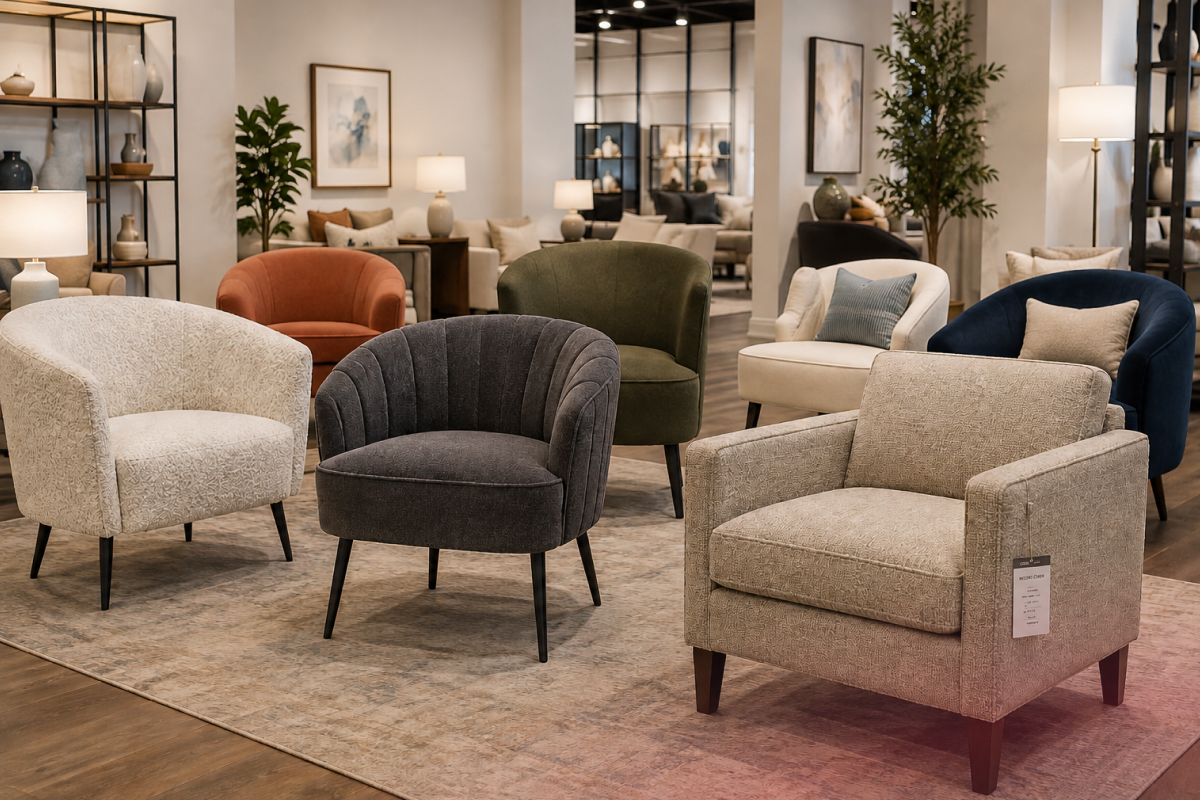
- Week 1. Pick a category with fast turn and manageable freight. For eample Accent chairs work well as a starting point, because they ship without creating complexity and sell across most buyer types.
- Week 2. Price the landed cost per piece, not the wholesale price.
- Week 2. Confirm stock status and lead. In-stock and made-to-order behave nothing alike.
- Week 3. Place the order and choose your delivery service level deliberately.
- Weeks 4 to 6. Receive, inspect, and photograph everything on arrival.
- Weeks 6 to 12. Track sell-through by SKU. Reorder what moved and drop what did not.
That last step is the point. Your first order buys data about which SKUs turn, and that is worth more than the margin on the order.
Which compliance rules do you inherit when you resell furniture?
When you resell furniture you become a link in the distribution chain, which brings recordkeeping and labeling duties. Three rules matter most in the US: upholstery flammability, composite wood formaldehyde limits, and California chemical warnings. None require you to test products yourself, but all require you to sell compliant goods and keep the paperwork.
Upholstered furniture must meet the federal flammability standard at 16 CFR Part 1640, which adopted California TB 117-2013 smolder-resistance testing nationally and requires a permanent certification label. Casegoods and anything built with particleboard, MDF, or hardwood plywood fall under EPA formaldehyde emission standards for composite wood products, which place recordkeeping and label retention duties on distributors and retailers, not only on manufacturers. If you sell into California, Proposition 65 warning requirements may also apply.
Ask your supplier for compliance documentation during onboarding rather than after an order lands. HomeRoots collects this information directly from manufacturers, making it easier to source products with confidence.
How do you fund a high-ticket first order?
Furniture ties up more capital per order than almost any other home category, and made-to-order lead times stretch cash-out days further. You have three options: pay upfront, buy on supplier net terms, or use third-party trade credit. Terms are often the difference between a first order you can afford and one you cannot.
Net 30 or net 60 moves your payment date closer to the date your customer pays you. Many suppliers extend terms only after you build a payment history, so expect to prepay early orders. HomeRoots offers a full range of payment options.
Frequently asked questions
How much cheaper is wholesale furniture than retail?
Trade pricing across the furniture industry is commonly quoted at somewhere between 20% and 60% below MSRP, with the spread depending on category, volume, and whether you stock or dropship. Judge a supplier on landed cost per piece rather than on the headline discount, because freight can erase a good wholesale price.
Can I buy wholesale furniture without a physical store?
Yes. Online stores, interior designers, home stagers, and hospitality operators all buy wholesale without a storefront. Suppliers verify that you are a business, not that you have a shop.
What is the minimum order to open a wholesale furniture account?
Opening order minimums in the furniture trade commonly run from the high hundreds into the low thousands of dollars, and dropship programs often carry no minimum at all. HomeRoots has no minimum order quantity.
How long does wholesale furniture delivery take?
In-stock domestic items typically ship within days and arrive by LTL freight in roughly one to two weeks. Made-to-order upholstery generally runs six to ten weeks, and custom casegoods longer. Imported container orders add ocean transit of roughly six to eight weeks, plus customs clearance and drayage.
Can I dropship furniture without holding inventory?
Yes, and it is the lowest-risk entry point for a new online store. Your supplier ships direct to your customer, so you never handle the goods. The trade-off is lower margin per unit and less control over packaging and delivery timing.
Do I need to buy a full container to get the best pricing?
No. Container buying gives the lowest unit cost, but it requires import handling, customs clearance, and enough forecast confidence to commit to one assortment months ahead. Most buyers reach better economics faster by stocking domestically and reordering what sells.
Wholesale furniture rewards buyers who measure before they scale. Open a trade account, run one narrow first order, watch your cash-out days, and reorder what moves. If rugs are part of your assortment, our guide to buying wholesale rugs covers the sizing and construction decisions specific to that category, and you can browse wholesale area rugs alongside your furniture order.