By Tom Ziv, Head of Customer Success, HomeRoots · July 12, 2026
For decades, furnishing a property meant building a spreadsheet: dozens of SKUs, quotes from multiple vendors, freight estimated separately (or worse, discovered later), and a delivery schedule stitched together by hand. That model made sense when every project had a designer, a procurement team, and months of runway. Most of the properties buying FF&E today have none of those. A student housing owner furnishing 80 bedrooms before August, a GM refreshing guest rooms against a brand deadline, a restaurateur with three weeks to opening — they don’t want a spreadsheet. They want a room. That shift is driving one of the quietest but most practical evolutions in hospitality procurement: the pre-configured room package. What a room package actually is A room package is a fixed bundle sold as one line: “[Room type] — $X per unit, landed, delivered and ready in a set number of business days.” Three things are fixed and printed: contents, landed price, and timeline. That structure exists to eliminate the two uncertainties that kill furnishing projects — final cost and real delivery date. When the price already includes freight and the contents are locked to in-stock items, there’s nothing left to be surprised by. It’s the same logic that made prix-fixe menus and turnkey construction work: complexity absorbed by the seller, certainty delivered to the buyer. Why the industry is moving this way Three forces are pushing procurement from line items to rooms. First, timelines have compressed — brand deadlines, turn seasons, and lease-driven openings don’t leave room for a 10-week specification process. Second, lean operations — most owner-operators have no procurement department; the person choosing furniture is also running the property. Third, freight volatility made itemized quotes unreliable; a package priced landed, by region, is the only format where the first number is the final number. (Why landed pricing matters so much is covered in our wholesale buying guide.) What packages look like by property type Student housing bedroom. Bed frame, mattress, dresser, desk, chair, nightstand, lighting — specified for durability first (metal drawer glides, wear-hiding finishes), because student housing FF&E is a replacement-cycle business. Priced per bedroom; ordered by the dozens or hundreds before turn season. Student housing common area. Easy-clean sofa, coffee table, media console, barstools or accent chairs, lighting — the pieces that take the most abuse and are photographed for every leasing tour. Hotel guest room. Beds and headboards, nightstands, dresser/TV console, desk or activity table, lounge seating, lamps, luggage rack, mirror — hospitality-grade, brand-standard-friendly, priced per key so renovation math becomes multiplication instead of estimation.
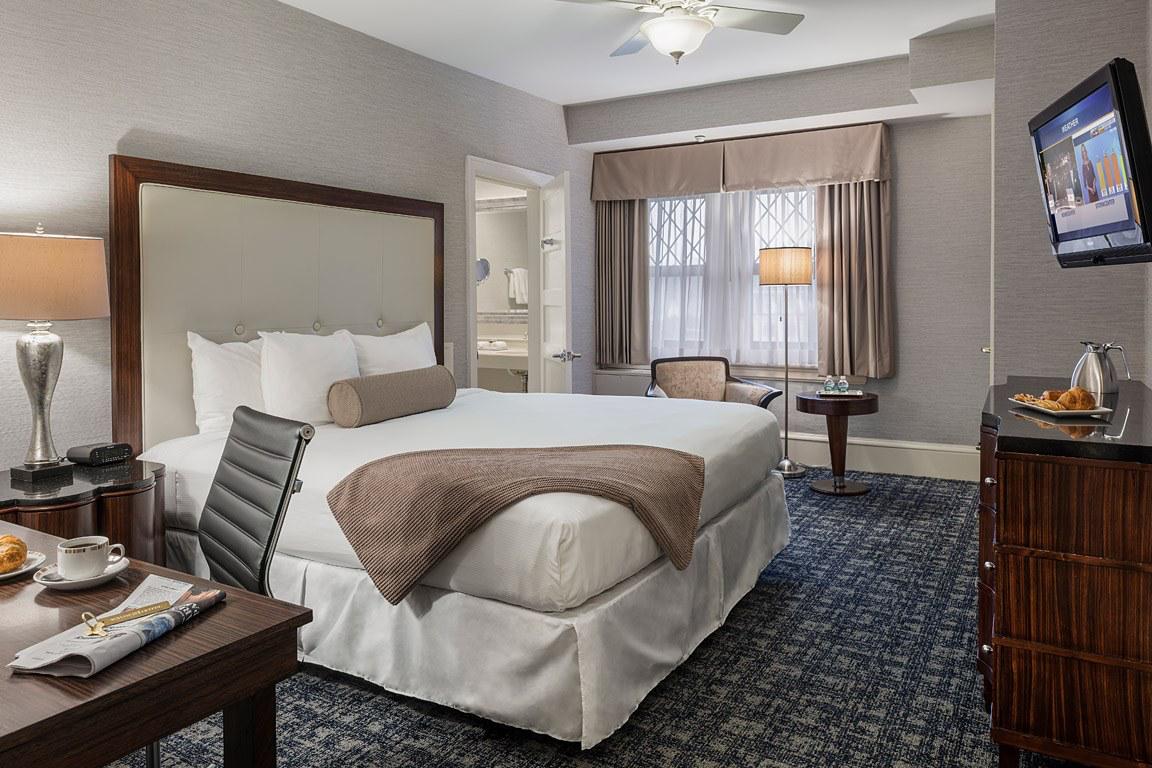
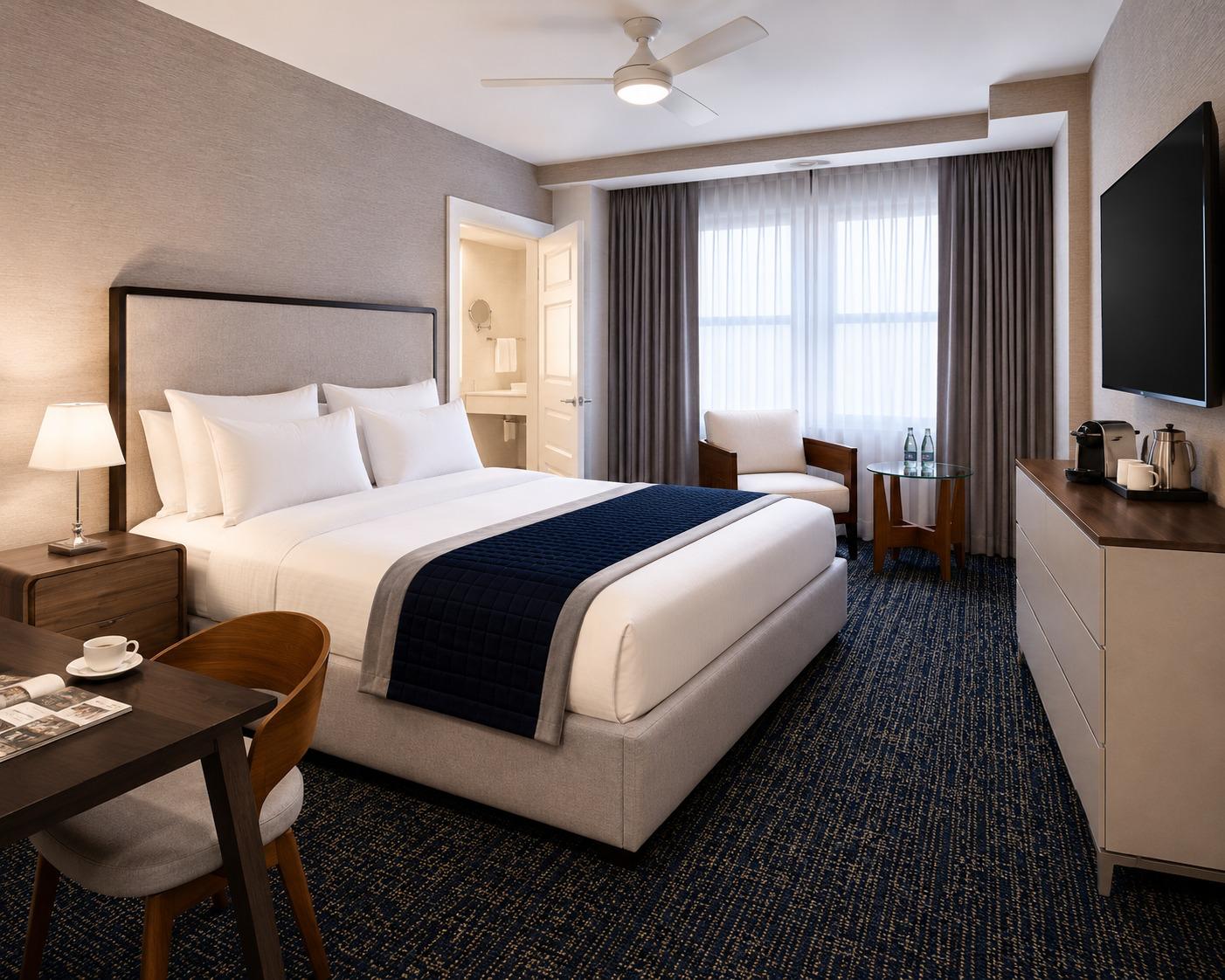
Before and after: hotel guest room
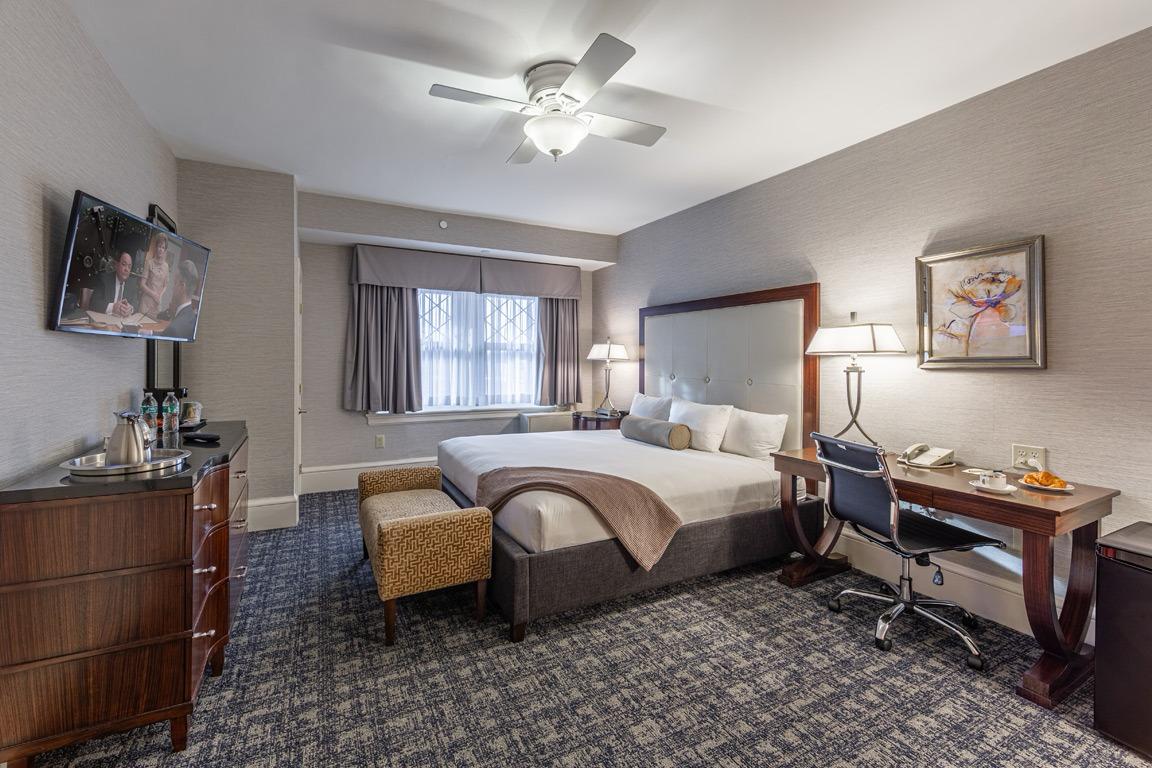
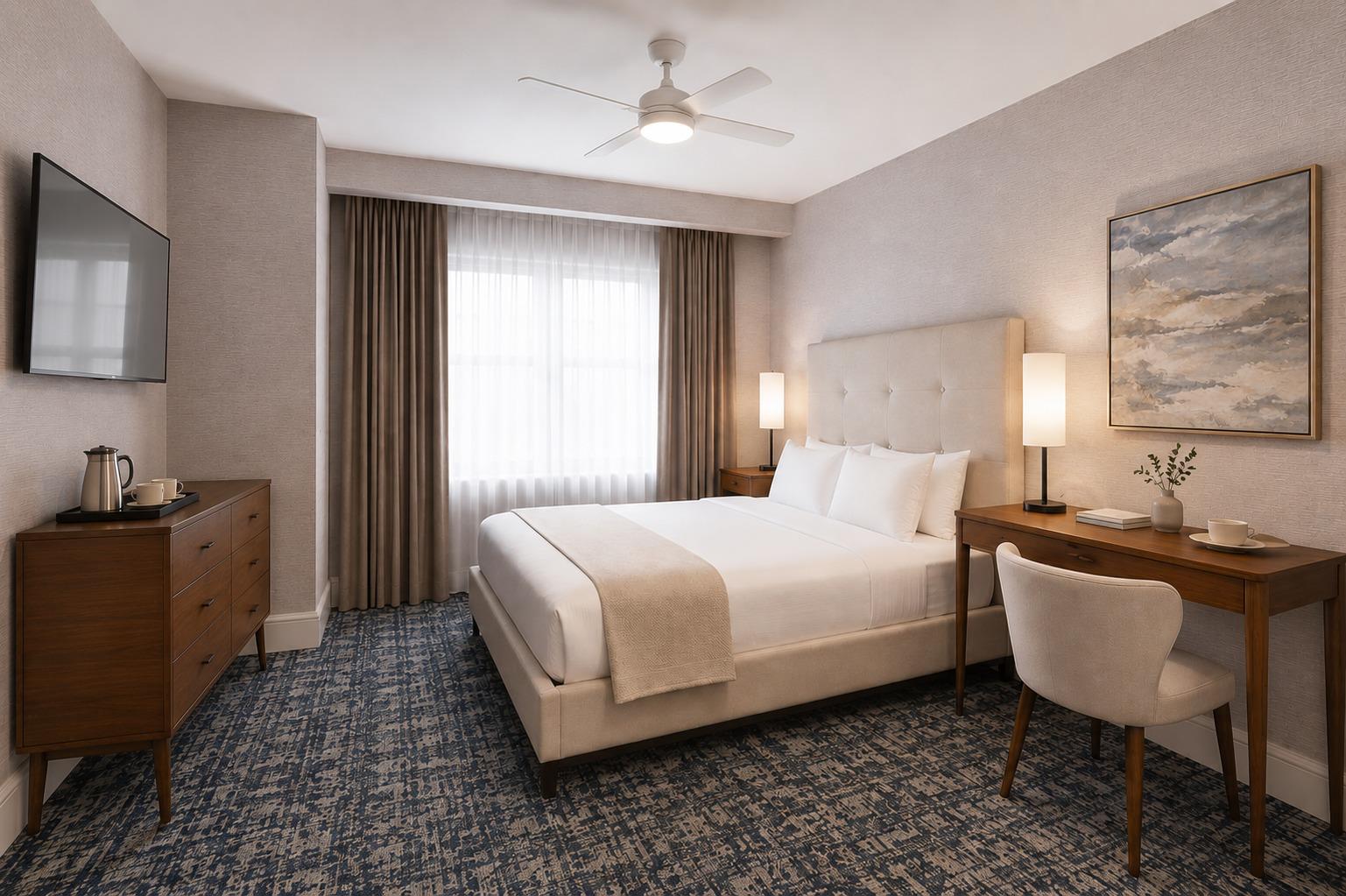
Before and after: hotel guest room
Restaurant dining room. Tables, seating, host stand, and service stations sized to seat count — sold against the one promise restaurant owners actually care about: the room is ready before opening night.
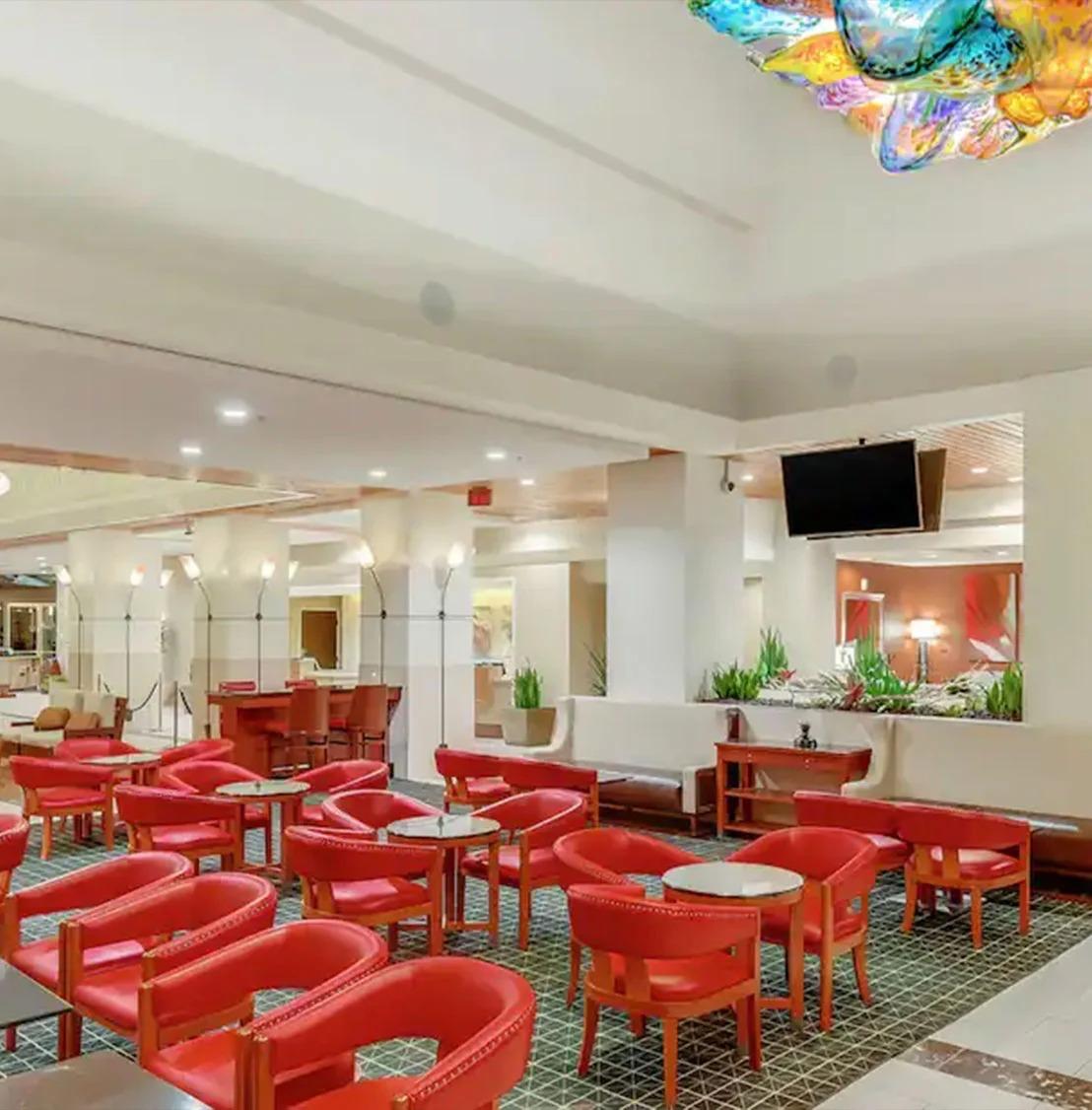
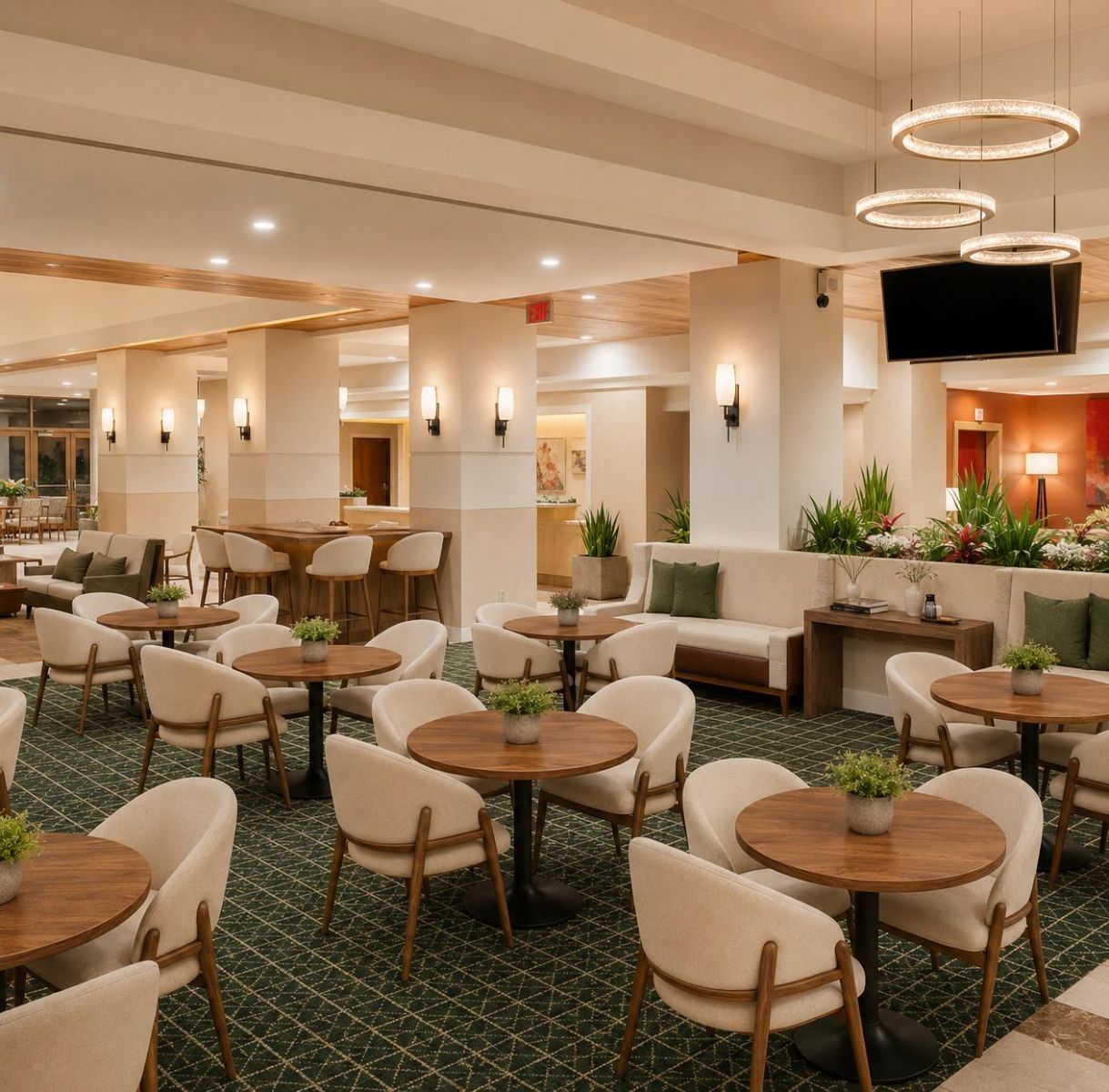
Before and after: restaurant dining room
Good packages come in tiers — Entry, Standard, Premium — so a budget-driven operator and a design-driven one shop the same page. And the honest ones publish prices by freight zone rather than hiding shipping in fine print. What to check before buying any package Confirm the contents are itemized (a “package” without a contents list is just a quote in costume). Confirm the price is landed to your zip or zone. Confirm every item is US-stocked with the timeline stated in business days — a package promise built on container lead times isn’t a promise. Ask what happens when an item needs replacing in year two: standardized, always-stocked package SKUs mean a damaged dresser is a reorder, not a redesign. And compare the package’s landed total against retail equivalents line by line — the gap is usually substantial, and we’ve broken down that math here. FAQ Are room packages more expensive than buying items separately? Usually the opposite: package contents ship consolidated, which drops freight per unit sharply, and wholesale-direct sourcing keeps item pricing 40–80% below retail. The premium you’re not paying is the coordination time. Can packages be customized? The point of a package is fixed contents — that’s what makes the price and timeline fixed. Swaps are normally handled as a concierge quote alongside the package rather than inside it. Who are room packages best for? Owner-operators without procurement teams, properties on hard deadlines, and anyone furnishing repeating room types at volume — student housing, multi-family, select-service hotels, and restaurants. HomeRoots room packages — Student Housing Bedroom, Student Housing Common Area, Hotel Guest Room, and Restaurant Dining Room — are built from US-stocked inventory, priced landed by region, and delivered ready in 10 business days, with Net 365 terms up to $50K. [See the packages and current landed pricing →]